
Dominic De Carlo’s work popped into our inbox in October, reading over his story of being a self taught designer, and clicking through images of perfectly finished and fitted menswear we knew there were some questions we wanted to ask him.
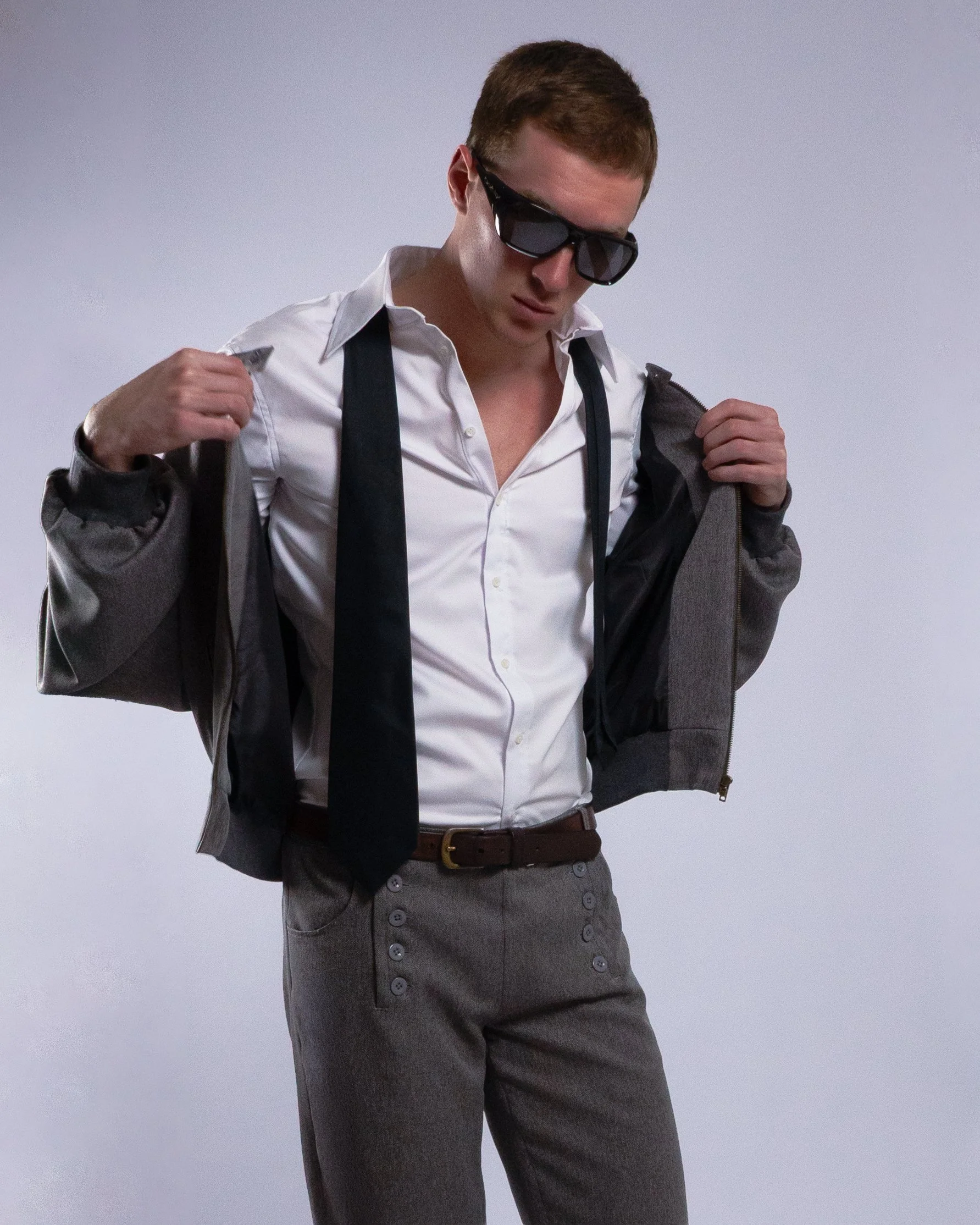
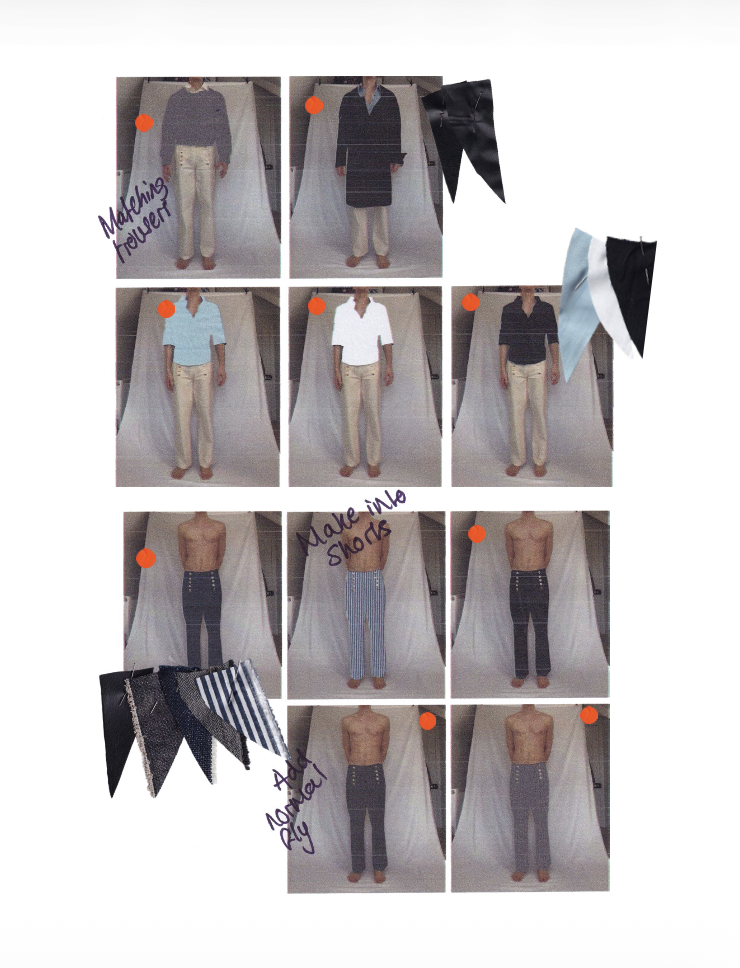
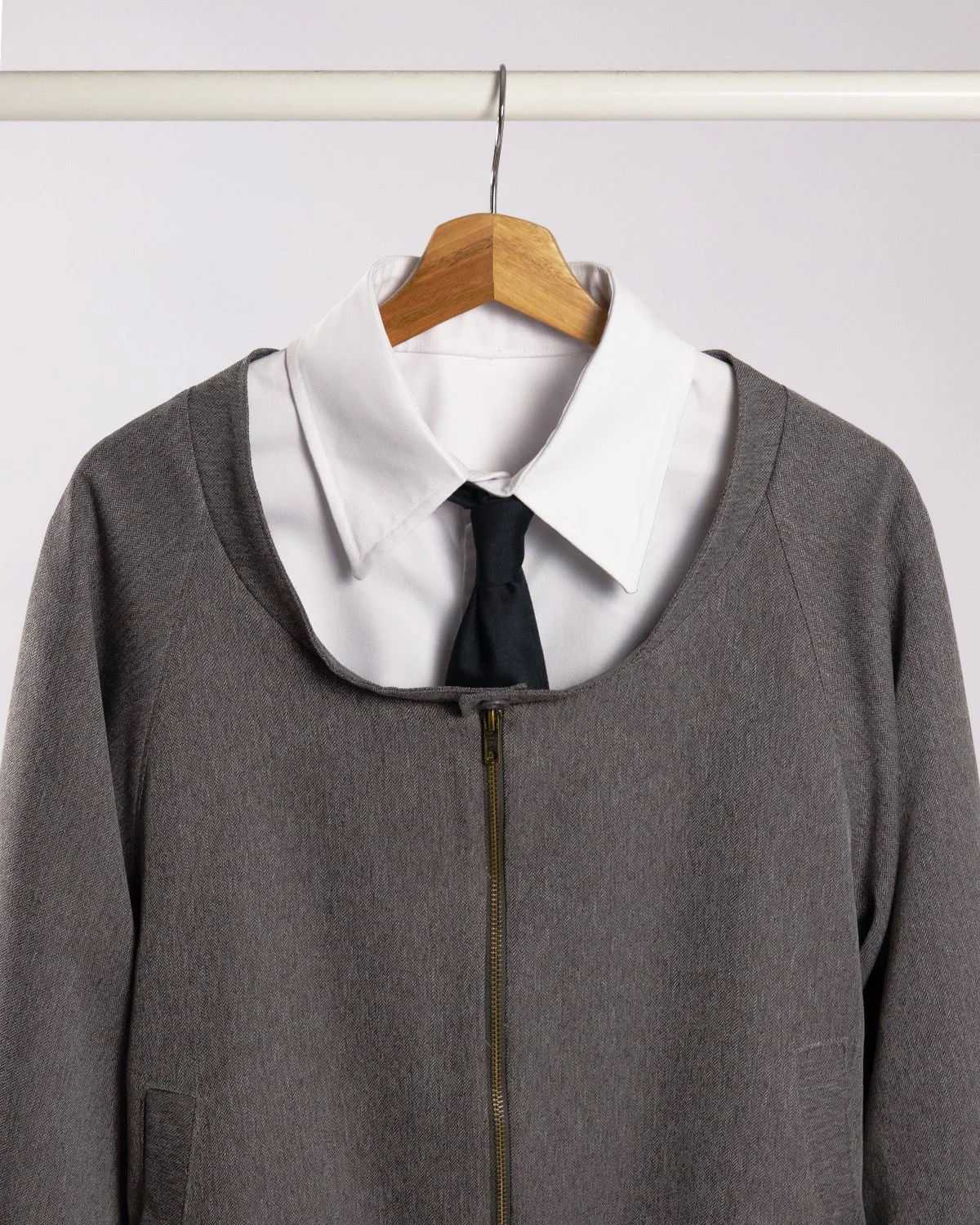
Tell us a bit about your path into fashion..
I studied Graphic Design and Communication at Chelsea College of Arts, UAL, which gave me a grounding in designprinciples and visual communication. It wasn't really until my placement year that I had something of a realisation that I didn't necessarily want my entire practice to exist behind a screen, or be confined to two dimensions. started university during COVID, so much of my first year was spent attending lectures online. Once things started opening up again, I found myself spending quite a bit of time around Central Saint Martins. Most of the people I'd met through halls were studying there, and through them I gradually got to know more people studying fashion. I think that was when the whole thing started to feel much more accessible. Fashion had always interested me, but I'd previously seen it as quite an intimidating industry to find your way into.
Compared with other physical design disciplines that require access to specialist workshops or heavy machinery, fashion seemed relatively approachable. All I really needed to get started was a domestic sewing machine, and fortunately I already had a little sewing experience - my grandma used to teach my brothers and me how to make cuddly toys as Christmas presents when we were kids.
I started teaching myself pattern cutting through YouTube, online forums and by helping friends out in the fashion studios. My first real project came about almost out of necessity. As anyone who skateboards will know, you tend to go through jeans pretty quickly, so I started taking old pairs apart with the idea that I could simply make myself new ones whenever I needed. It turned out to be considerably more time consuming than I'd first romanticised, but it was a good way to learn.
What is it about fashion that made you want to switch over?
Fashion had always interested me, but I'd seen it as quite inaccessible, particularly when it came to having the technical knowledge and facilities to produce garments to a high standard. Once I gained a little more exposure to the process, I realised I'd perhaps overcomplicated it in my head. All you really need to get started is a sewing machine; the rest can be learnt along the way.
I think there was also a fear of being boxed in. I've always had this recurring nightmare, of spending my entire career working within one discipline. Part of my motivation to explore fashion came from wanting to avoid that. At university, I gradually realised just how much access I had to other disciplines. I could use the fashion, print and photography studios, and with most fashion lectures and seminars being recorded and available online, I had access to much of the same knowledge as the fashion students, even if I missed some of the practical teaching.
Initially, I was hesitant about pursuing fashion seriously. I wondered how I could compete with people who'd spent years formally studying fashion design when my own education was largely unofficial and self-taught. Eventually, though, I began to see some value in approaching it from the outside. I hadn't been trained to think like a fashion student, and perhaps that was precisely what could give me a different perspective.
Some of your first real industry experience was interning at Mowalola, how did you swing that?
A lot of it came down to luck and coincidence, which probably isn't the answer people are hoping for, but I think there's an element of that in most opportunities. There's a narrative on social media that if you work hard enough, or sacrifice enough for your passion, you'll eventually get to where you want to be. Of course, I believe in putting as much time and effort into something as you can, but I don't think hard work guarantees anything. There's still a huge amount of luck involved. A friend once said to me that "people hire happy people", and that it's important to find a balance between working hard and enjoying what you're doing. I've come to agree with that.
That said, I don't think you can just wait for luck to find you. You have to give it opportunities to happen. In my case, that meant reaching out to Mowa directly on Instagram. I sent her a pretty straightforward message: "I back my ability on a sewing machine, I'd love to help and get involved if you'll have me." Thankfully, she saw it and was willing to give me a chance. It wasn't a particularly elaborate approach, but it changed the direction I was heading in.
I think that says a lot about Mowa, too. Fashion can be quite difficult to find your way into, especially without a conventional background. I'm grateful she was willing to look beyond my lack of formal training and give me the opportunity to learn on the job. It made a real difference to me.
I can only speak from my own experience, but I'd say don't wait until you feel you've got everything figured out. Make things, show people what you're interested in and don't be afraid to reach out. I certainly didn't have a particularly extensive body of fashion work to show when I contacted Mowa. I just had an interest in making clothes, some confidence in my ability on a sewing machine and a willingness to learn. In the end, that was enough to get the conversation started.
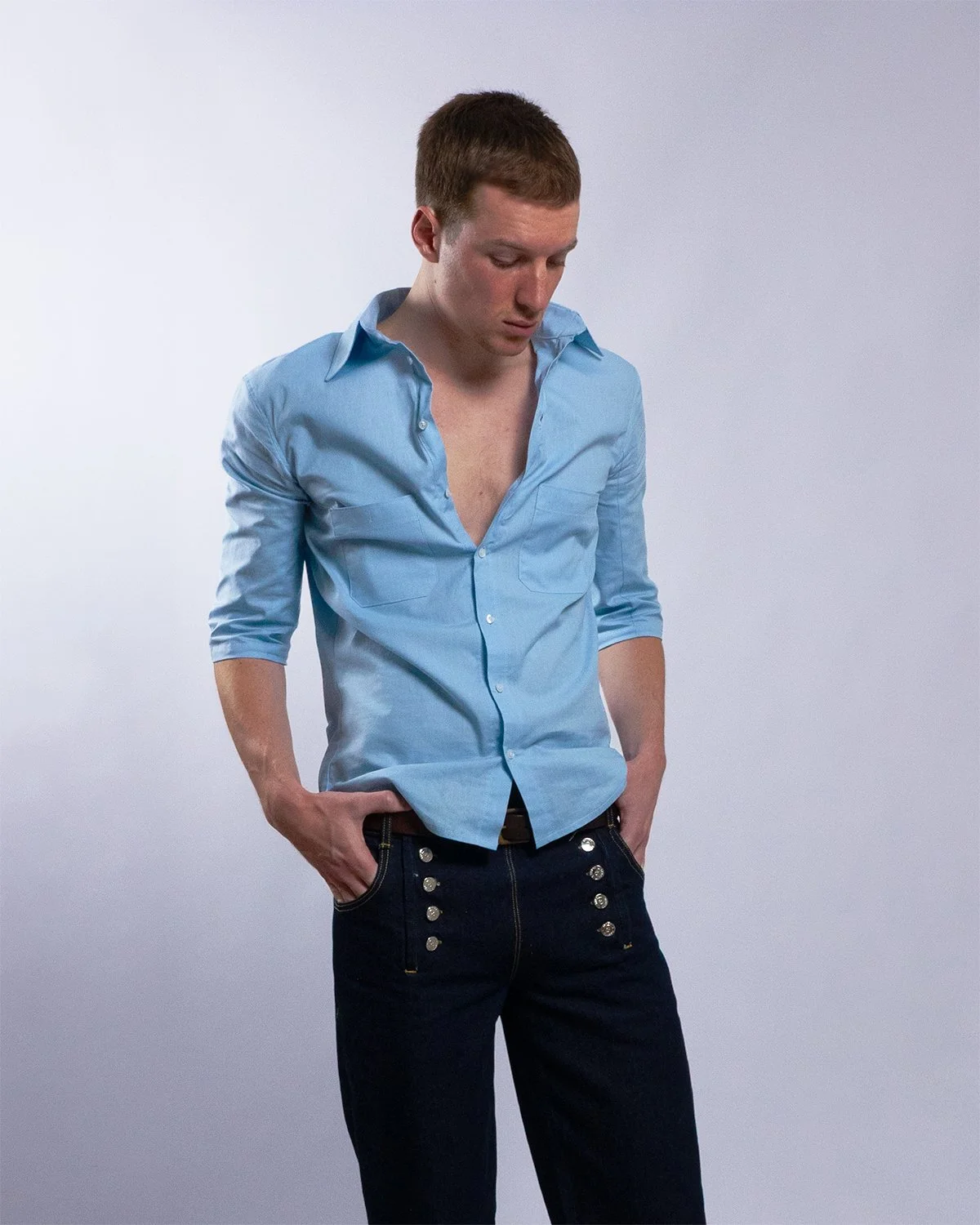
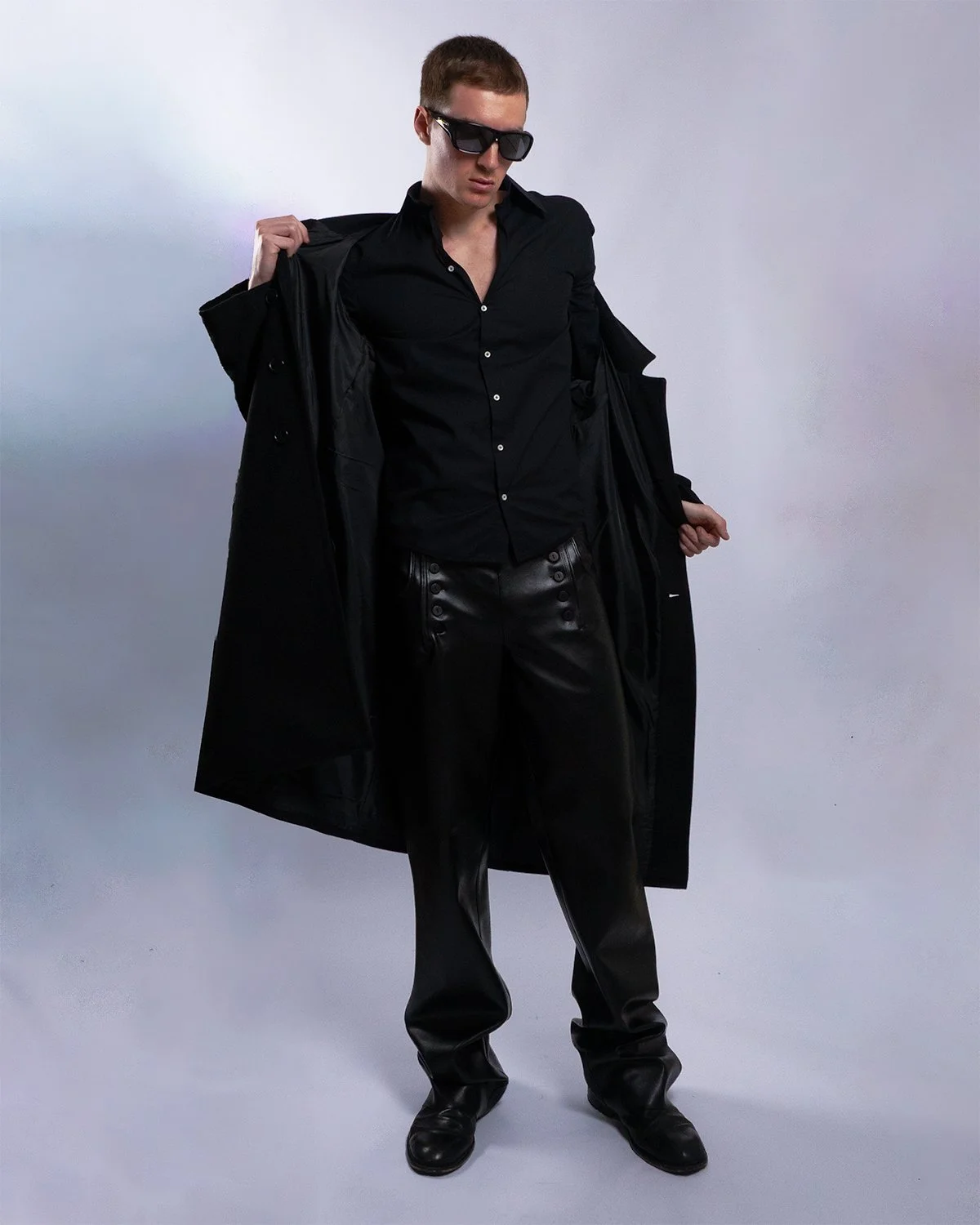
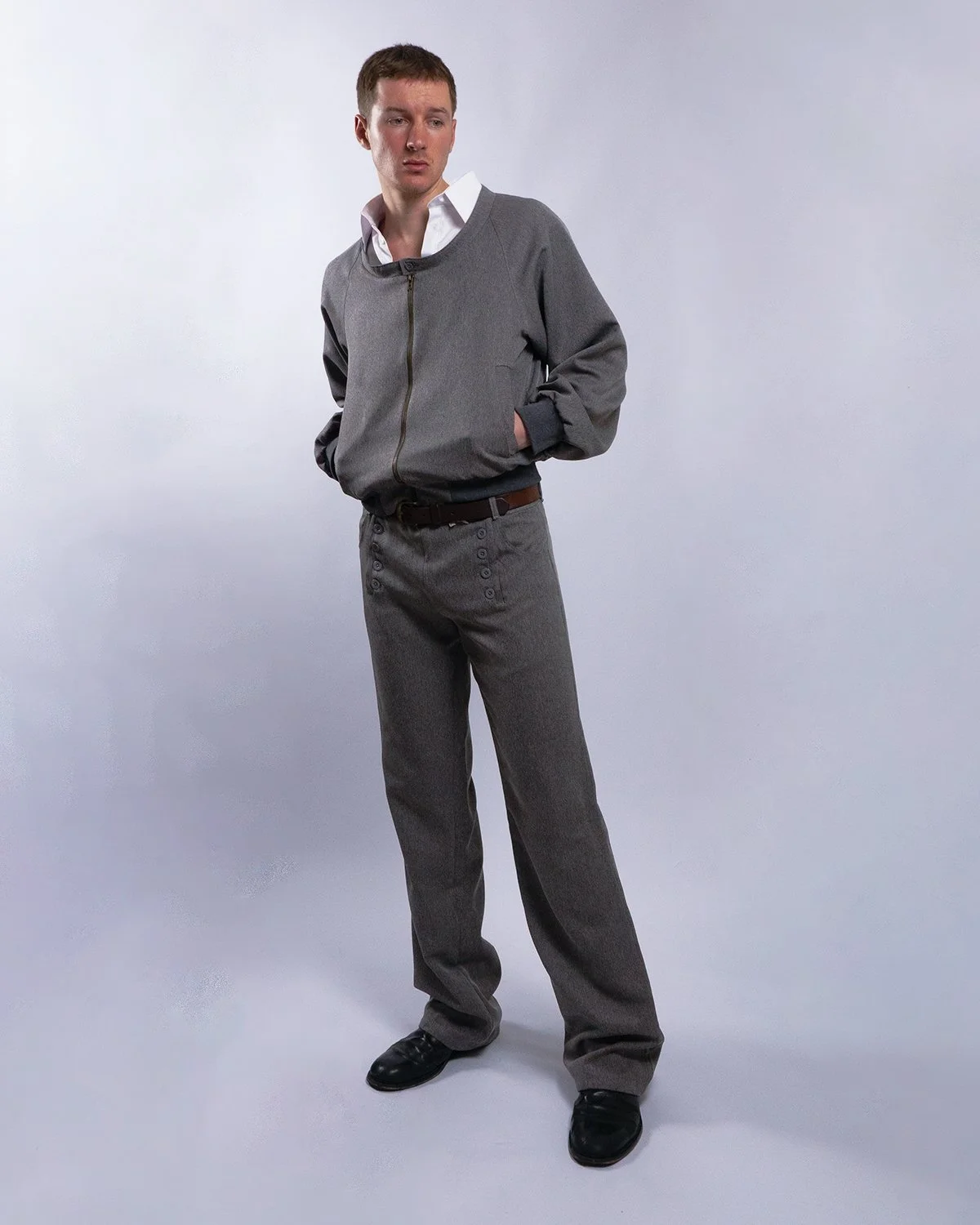
So let’s move over onto your own personal design work, you’re giving menswear a much needed update. Tell us what you feel is outdated, and what you’re trying to create with your designs.
Coming to university, I was exposed to a much wider range of people, styles and ways of expressing themselves. It made me realise that I hadn't really given much thought to how I expressed my own masculinity. I'd never particularly identified with a macho or overtly performative version of it, but equally, I hadn't quite found a way to articulate what felt right to me.
I think that personal exploration sits within a wider conversation around masculinity, particularly straight masculinity, which feels increasingly polarised. Much of the public conversation seems to be dominated by the manosphere and moreregressive ideas of what it means to be a man. Against that backdrop, I think there's a real need for more nuanced and positive representations of masculinity. Not necessarily a rejection of traditional masculinity, but a broader understanding of what it can look like.
That became one of the starting points for the collection. I was interested in exploring a more personal, understated expression of masculinity; something that didn't rely too heavily on familiar masculine signifiers, but still retained a sense of confidence and character.
A lot of the visual inspiration came from 1960s European cinema, particularly its male protagonists. I found myself drawn to the way some of these characters were portrayed, and recognised something in their more understated approach to masculinity that felt familiar to my own. There's a certain ease and quiet confidence to them that I found compelling, and it gave me a useful reference point for the collection. I wanted to translate some of that into the clothes through relaxed tailoring, softened proportions and subtle construction details, bringing a sense of openness to familiar menswear.
Ultimately, I wanted the collection to feel masculine without being overly concerned with demonstrating what masculinity is supposed to look like.
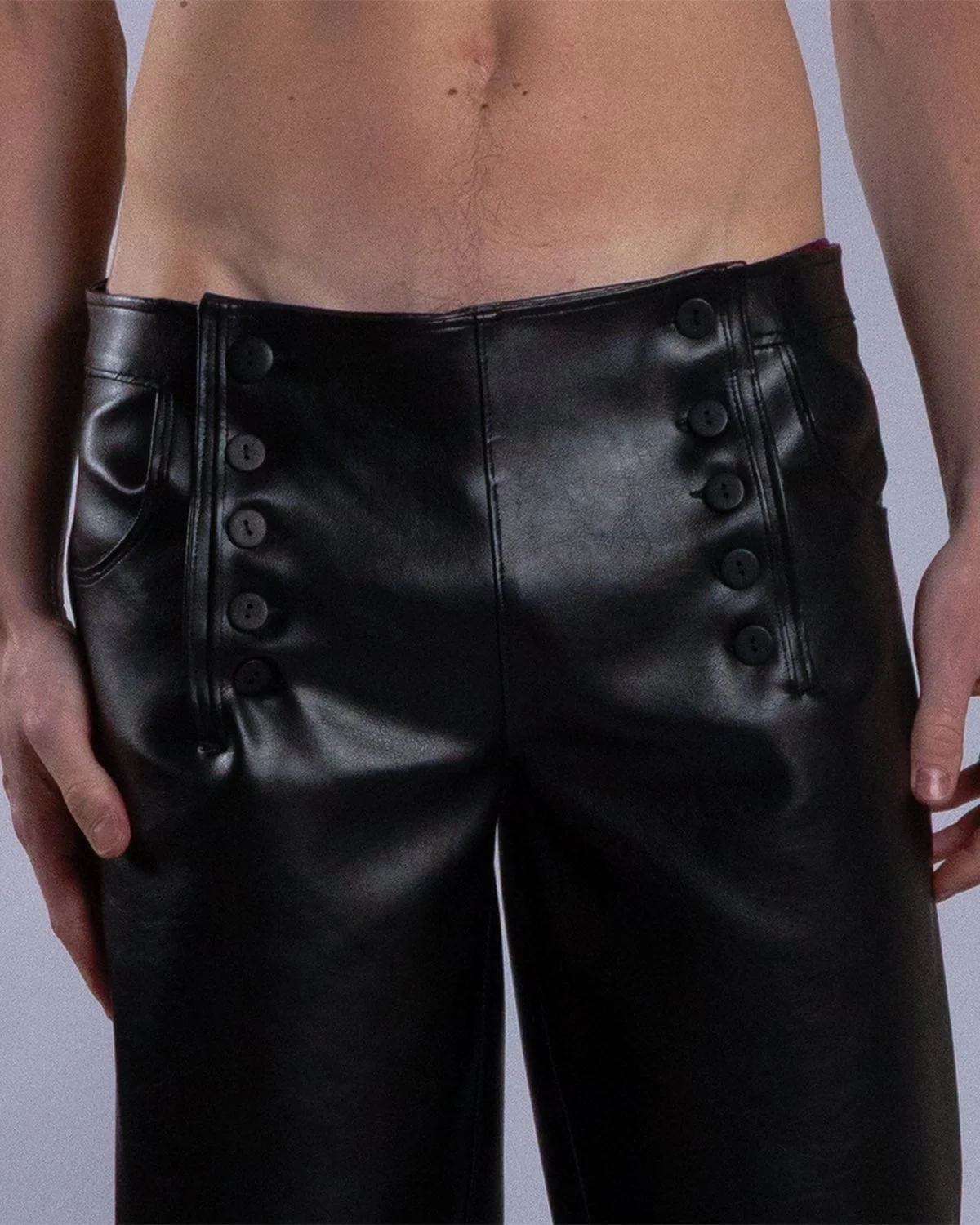
Honestly couldn’t agree more - masculinity can be very much present without latching onto any of the toxic ideas about ‘what a real man is’ that are so prominent today. We were particularly drawn to the design details in your work, the buttons on the trousers for example - can you talk us through those?
“A lot of the details came out of looking further back into the history of menswear and understanding how certain garments and construction details became associated with particular ideas of masculinity. Across different periods, clothing was often used to communicate things like physical strength, athleticism, wealth or status, and I found it interesting how closely those ideas were tied to the way men were expected to present themselves.
The fall-front trouser is one example. I was interested in taking a historically recognisable detail and bringing it into a contemporary context through changes in fabric, silhouette and construction. It felt like an opportunity to revisit some of those older ideas and give them a different meaning, rather than simply reproducing the garments themselves.
There was also a slight underlying narrative around the pressures some men still feel to be providers. Despite how much ideas around gender roles have changed, I think there's still an expectation among many men that their value is tied to their ability to work, provide and maintain a certain standard of living. I was interested in the sense of quiet desperation that can come with that, and the feeling of being caught in a routine that's difficult to escape.
The shirt, or what I came to think of as the 'office shirt', became a way of expressing that. I saw it as a symbol of that repetitive working life: the routine of getting dressed, going to work and doing it all again the following day. The deliberately close tailored fit was intended to make the garment feel almost restrictive, while the wired and open construction of the collar suggested an attempt to break out of that uniform. In a way, the clothes became a means of expressing both the pressures of those expectations and the desire to move beyond them.
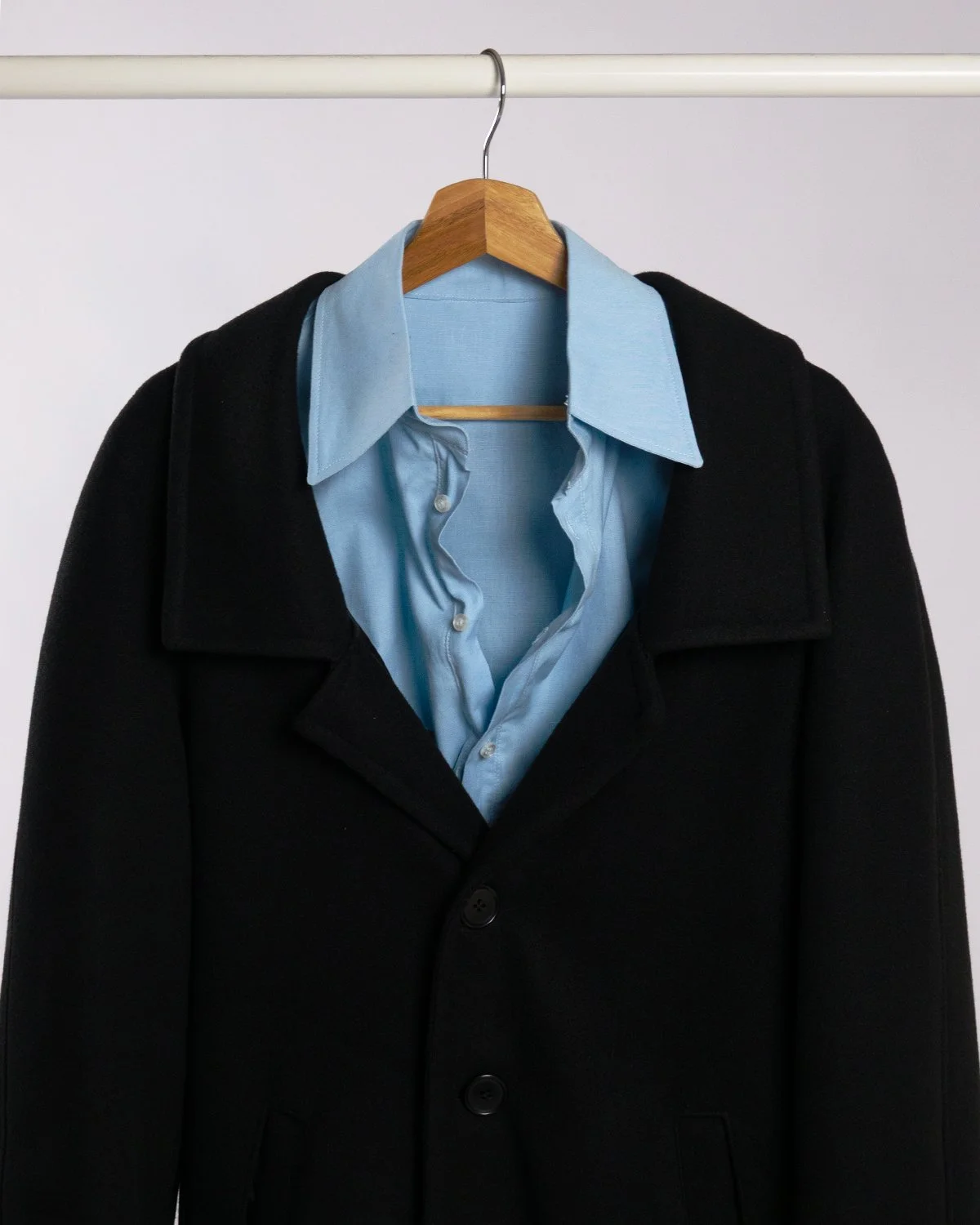
Ok, we need to go back to the learning process again, because you have such a design sensibility with these historical references, small attention to detail and actually constructing every garment yourself… how did you actually tackle learning so much new information?
“Honestly, through a lot of trial and error. I started with the basics and gradually built things up through online tutorials, forums and whatever resources I could get my hands on. I'd ask friends studying fashion what textbooks they were using and often buy the same ones myself. I also spent a lot of time getting hands-on, taking apart old clothes to understand how they were constructed and heading to places like Dover Street Market to look more closely at how different garments were made.
I think my graphic design background gave me a useful starting point in other ways. It taught me to think about how an idea is communicated visually, how the work might be perceived and how all the different elements come together to create a bigger picture. The actual process of making clothes was a completely different learning curve, though.
There were plenty of failed samples, things that needed unpicking and moments of starting again from scratch. But I quite enjoy that part of it. I've always found I learn best by getting stuck in, making mistakes and working things out for myself. Doing everything hands-on has also given me a much greater appreciation for the thought and technical decisions that go into making a garment.
What keeps you so motivated?
I'm quite easily inspired by things outside of fashion. Cinema, photography, interiors, art, architecture and even just observing how people dress and carry themselves. I think having interests across different disciplines feeds into the way I work. I'm particularly interested in how ideas, techniques or ways of thinking from one discipline can be taken out of heir original context and reinterpreted in another. I think thats one of the quickest ways to originality.
I’m also quite motivated by the idea of developing a point of view of my own. There's so much incredible work out there, and I'm constantly looking at what other people are doing, but I think the interesting part is taking those influences and references and finding a way to make something that feels personal to you, rather than simply recreating something you admire.
I suppose there's also something quite motivating about figuring things out for yourself. A lot of my journey into fashion has involved learning as I go, finding my own resources and creating opportunities where I can. I enjoy that process, particularly the freedom to follow an idea and see where it takes you. There's no particular blueprint I'm trying to follow, which I think makes it all the more exciting.
Okay so you’re self taught, you’ve created your first collection, you’ve gained some industry experience - what’s next?
Since finishing the collection, I've been keeping busy with a few independent projects and continuing to develop my skills, particularly on the technical side of garment construction. I've also been experimenting with ways of bringing my graphic design background further into my fashion work, through print, pattern and textile development. It's an area I'm particularly keen to push further, and I think there's a lot of interesting potential in bringing the two disciplines together.
The ideas around masculinity that informed the collection are something I'd like to keep exploring, too. I don't really see the collection as a finished statement, but more as the beginning of a conversation with myself. I'm interested in taking some of those ideas into new territory, perhaps through different silhouettes, materials or even entirely different approaches to making clothes.
Alongside that, I'm continuing with freelance graphic design, which if i didn’t mention is what I do to survive financially, it also keeps me creatively busy and gives me the chance to work across quite different disciplines. It's been interesting finding ways for the two to feed into one another, and I'm keen to see where that takes me.