
G(end)er Swap with Santi: clothes, community and self expression.
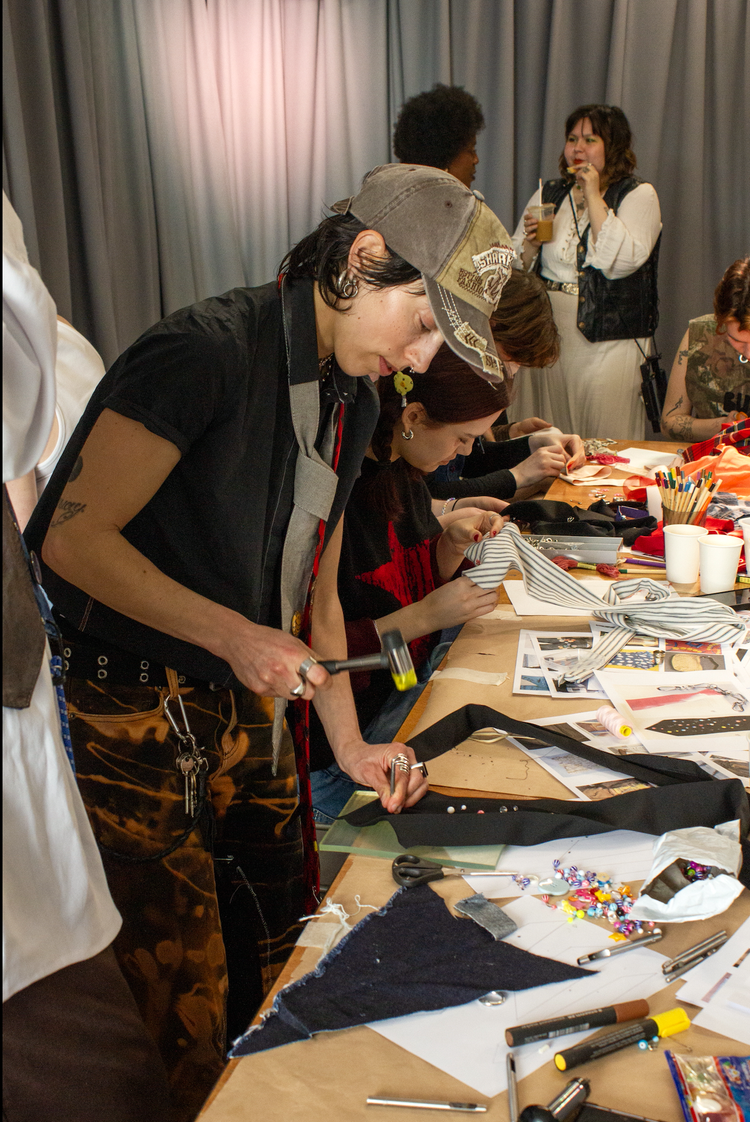
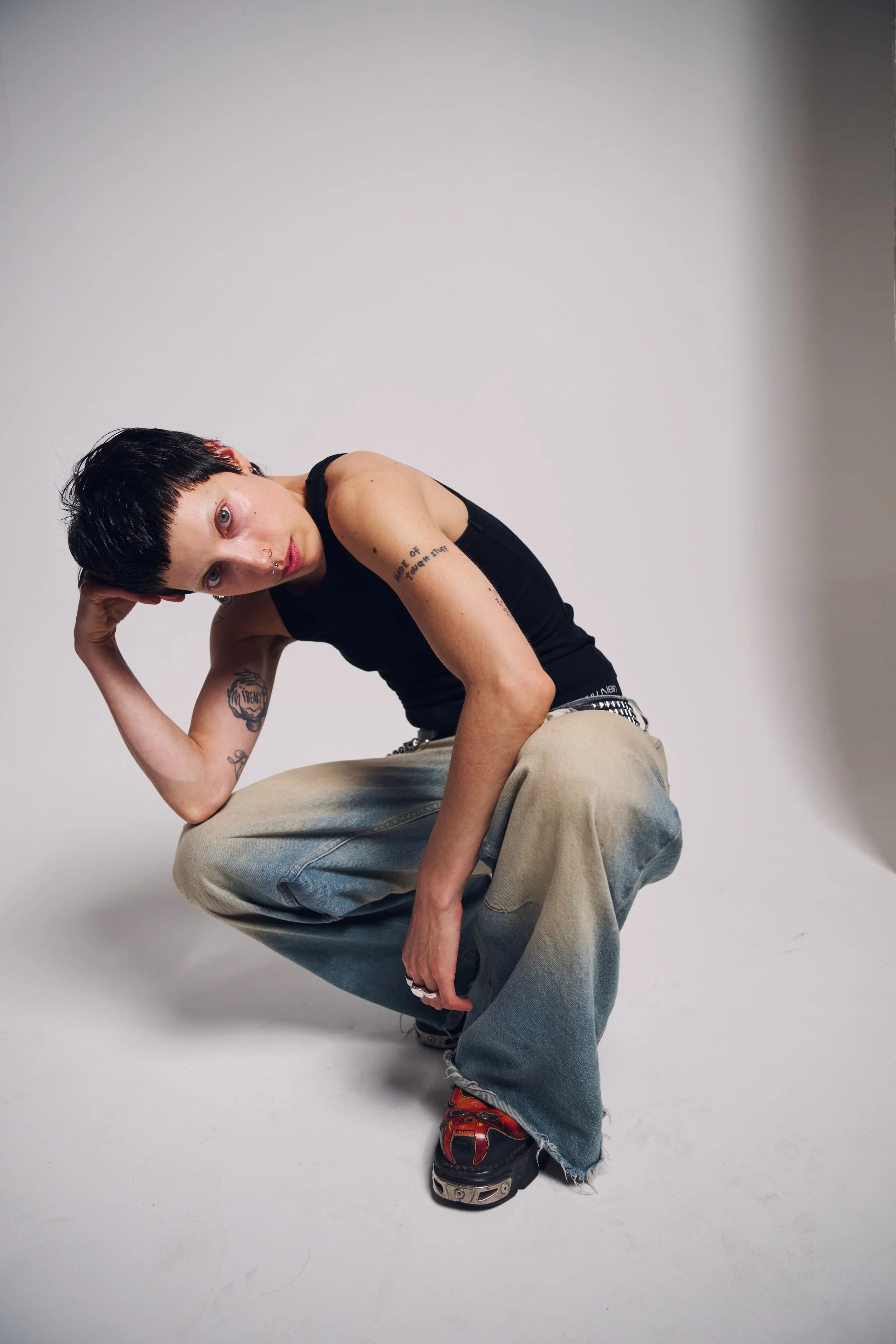
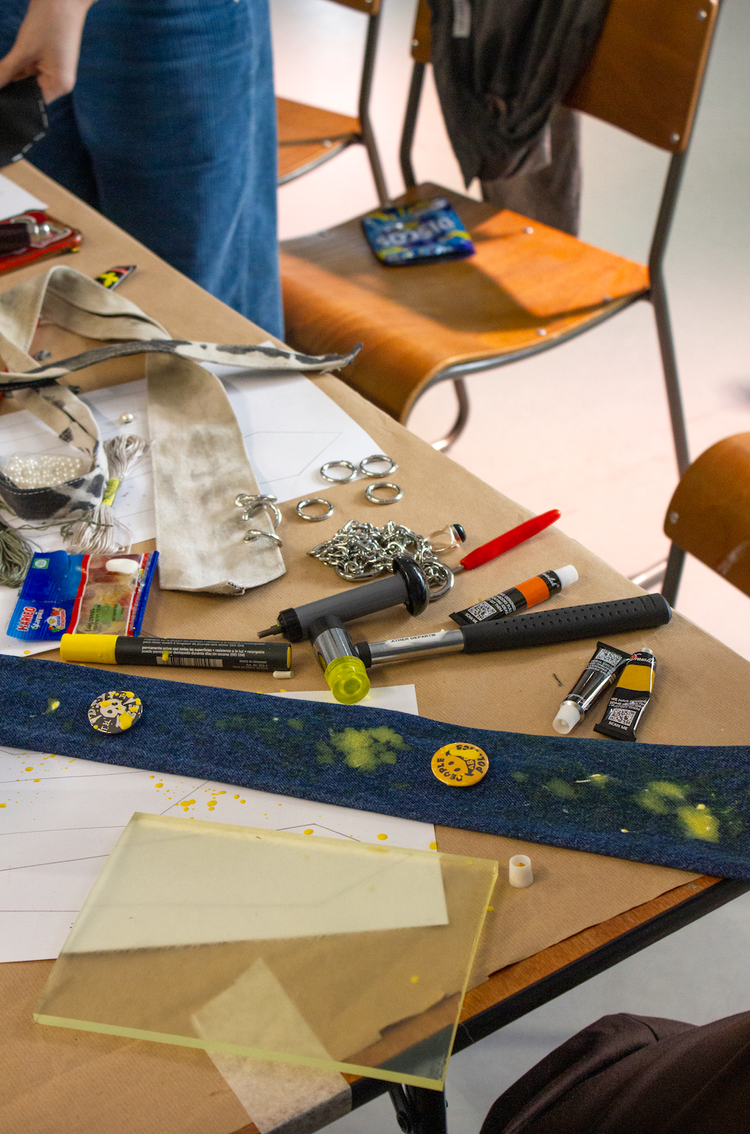
Readers - you might recognise Santi from issue 2 of The Grey, featuring in one of our in house editorials. (If not - buy your copy already!!) After chatting on set on the day and finding out all about G(end)er Swap and the amazing work that Santi did outside of modelling for us we couldn’t wait to shoot of an email and find out some more. We knew this conversation was going to jump into fashion, community, identity, self expression, DIY and so many more insightful intersections - but we decided to start with the basics…
For people who aren’t familiar with your work, could you give us a quick intro?
Hey, I’m Santi! I am a community organiser, performer and (DIY) creative based in London. I am the Founder of G(end)er Swap- the UK’s first LGBTQ+ style outreach organisation that supports trans and gender-diverse people to access style support via workshops, pop ups and digital style resources. My work (workshops, writing, performance) focuses on DIY style, craft and aesthetics as a medium for (trans) identity exploration and experimentation. I create/curate/deliver G(end)er Swap programmes with a focus on creating safer spaces for trans+ people to experiment with and find freedom in self-expression. I also do a lot of other things like drag, up-cycling, modelling, makeup artistry etc. Jack of all DIY fashion trades you could say….
Well said - on that point, you do so many things, and so many of them sit at the really interesting intersection between fashion and gender – so I could honestly ask you a million questions right now, but I’m going to jump straight in with a big one - why does fashion matter – especially in a trans+ context?
I would first answer without addressing fashion, and say that personal self-expression and styling deeply matters to trans people because our external expression reflects our inner gender experience. It makes or breaks whether we can step out the front door and into public space and carry on with our day, we use self-expression to resist social norms – to declare loudly that we exist, and for some, clothes are tools to blend right in to the fabric of society.
Whichever experience one has (to fit in/stand out), clothes serve as self-affirmation, as a way to elevate well-being, as a way to feel more in line with our gender identity as trans people.
Now, when it comes to fashion (the manifestation of clothing designs/brands/aesthetics perpetuated by the mainstream as I see it), I would say that it matters to trans people for the fashion world to include them – to see themselves represented. Fashion brands need to (continue to) create designs that fit gender non-conforming bodies, to represent trans people in their campaigns, and to include gender diversity in their language and branding.
Trans people are in conversation with fashion constantly, in the sense that they use fashion discourse and personal narratives a lot in advocating to be seen, heard and to change social or cultural understandings of transness in society. For example, activists such as Alok Vaid Menon share their personal experiences with fashion in this way. Fashion is an activist tool for trans people. Self-expression and styling is a life line for trans people – and both are in conversation with each other all the time.
And what does your programme under G(end)er Swap offer to your community?
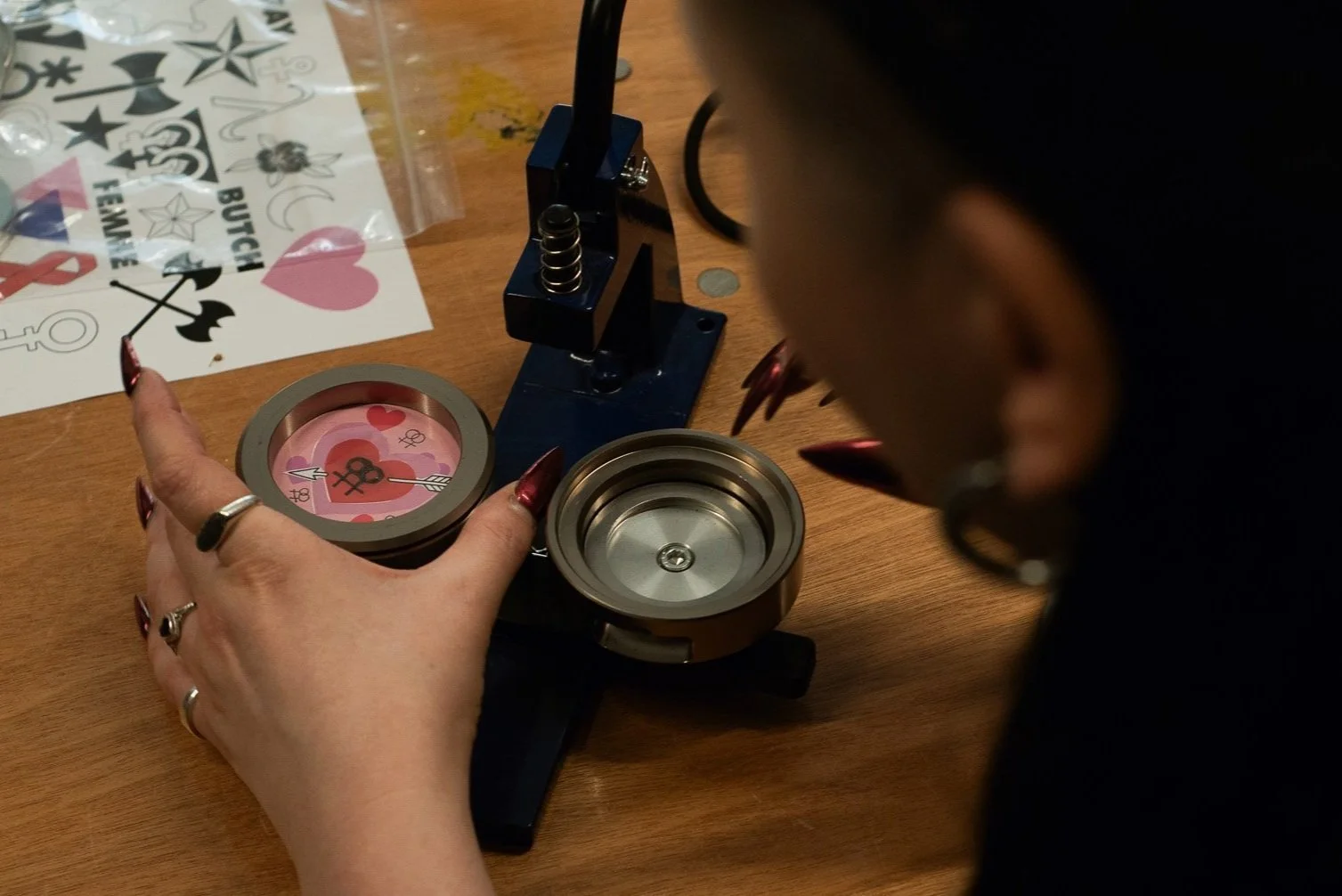
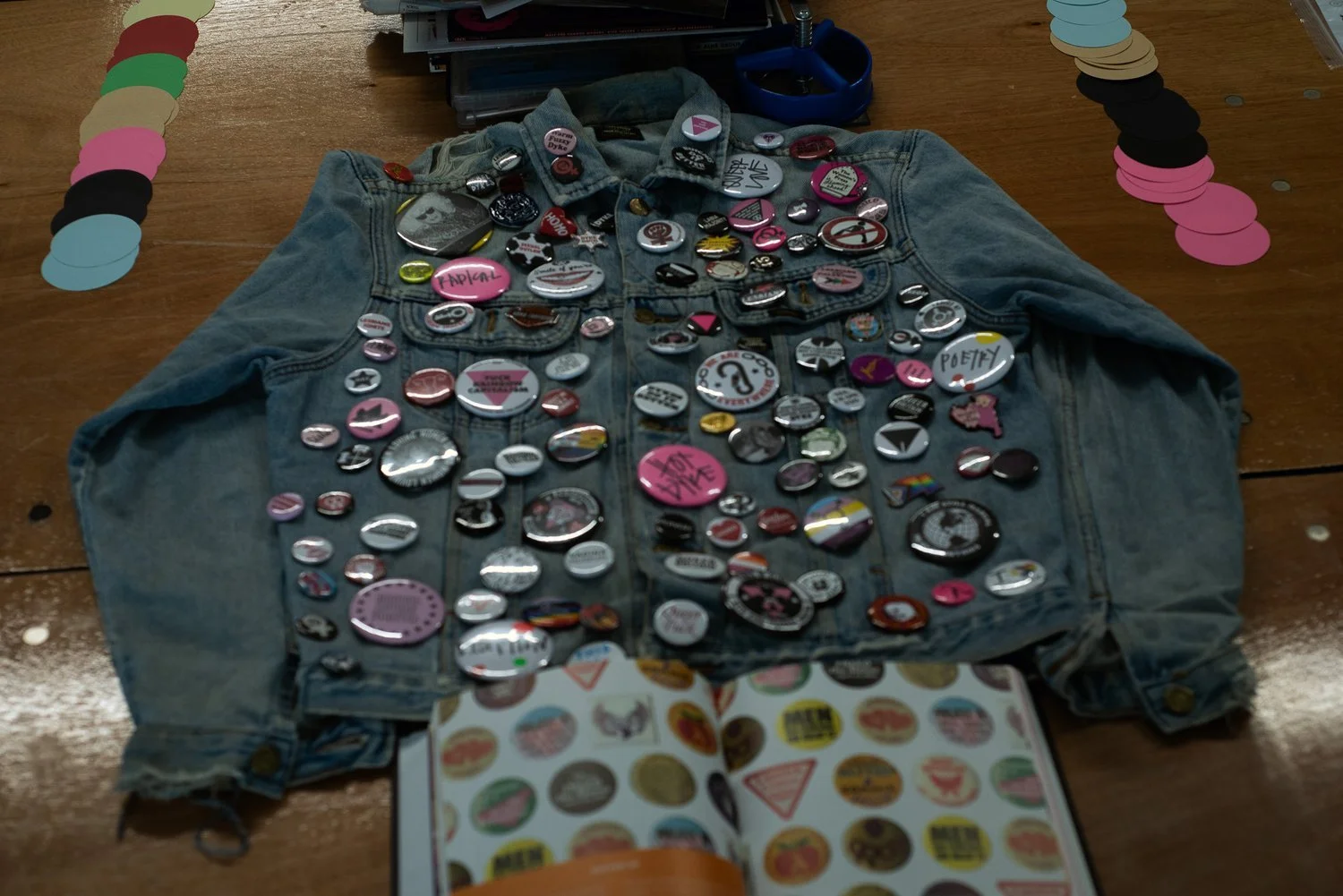
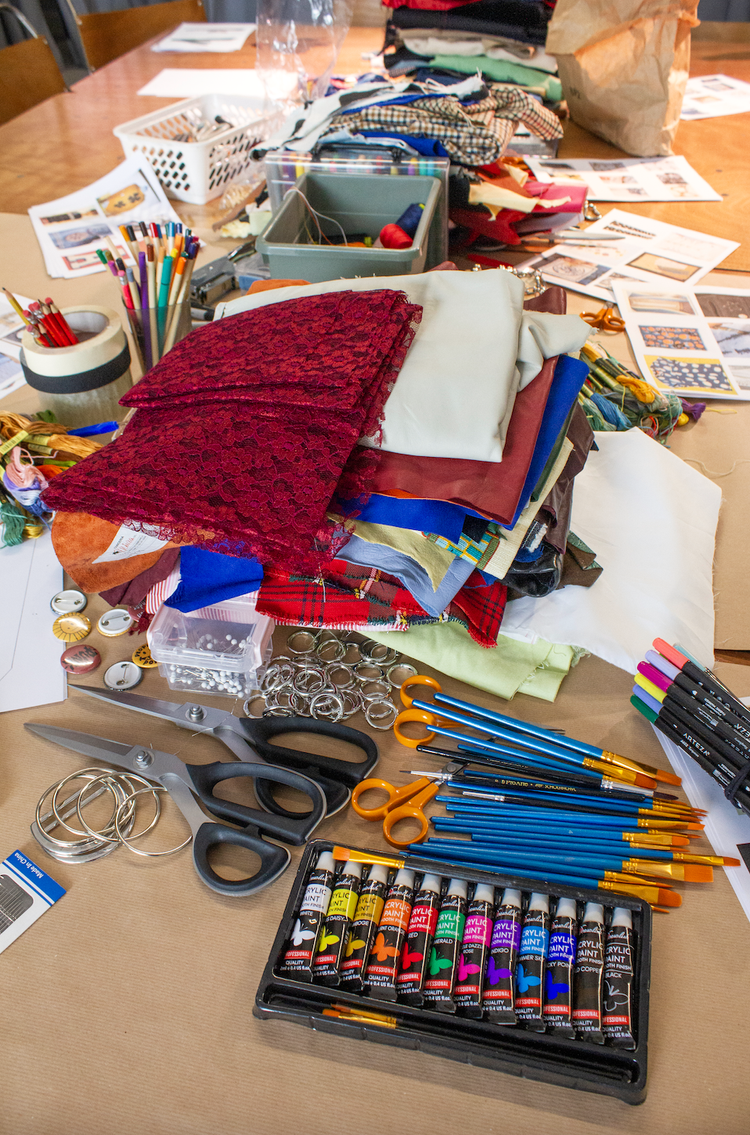
G(end)er Swap is anti-(mainstream) fashion and instead fills the gap for trans people where the fashion world hasn’t delivered. G(end)er Swap offers style support and style resources that are tailored by/for the trans community. For example, we focus on style advice/tips/inspiration for non- binary experiences, trans masculine and trans feminine experiences and those who identify as a gender experience outside of this. G(end)er Swap offers style resources that rely on a sustainable fashion framework and focus on ways to find your authentic self-expression via swapping, mending, DIY and thrifting techniques.
Trans people have historically exchanged style tips, clothes and gender affirming apparel in subcultural/underground spaces – and so G(end)er Swap very much is keeping this tradition alive whilst also spreading the message far and wide about the existence of trans identities while using fashion as a lens to do so. G(end)er Swap has been a safe haven and point of access for trans people to experiment with their personal style which doesn’t cost a lot and which is free from the confines of gendered changing facilities, clothing labels or judge-y customer service reps often found in mainstream shopping experiences.
How did G(end)er Swap come about, and how did you get it off the ground?
G(end)er Swap started as a small community clothes swap in 2017. When I came to London (from Canada), I kept researching for queer clothes swap events/pop-ups at a time when I was grappling with my own gender woes (questioning my gender) and couldn’t find much of a selection so I decided to start my own. I literally created the logo and a Facebook page at 3am while sleeping on my exes couch and then I just launched my first event which gained pretty rapid popularity from then on.
At the time I was starting my masters in Gender Studies where my research focused on trans fashion activism- and so both my research and my community organising work went hand in hand and fuelled each other. I was able to get G(end)er Swap off the ground thanks to the charity pot fundraising initiative from LUSH Cosmetics. I actually thank LUSH immensely for their support in helping to really get G(end)er Swap going!
In 2019 I registered G(end)er Swap as a community interest company, and myself as a director, and then it REALLY took off once the pandemic hit and the trans community really needed access to self-care resources during immense isolation and socio-economic uncertainty. We boomed digitally and delivered some really impactful online support initiatives during that time. Then a core team was built and more programming flourished.
It’s such an incredible initiative, I love that its so personal, but also so collective, it’s filling such a gap but also continuing an underground history… it’s really joyful. What’s your favourite item of gender-affirming clothing or clothing that brings you joy?
Honestly, I am obsessed with a super tight plain ribbed vest, and I also LOVE LOVE LOVE kids t-shirts worn as baby tees. They compress my chest, they hug my arms so it feels like I have big guns, and they make my shoulders feel buff. My other favourite picks, are super wide leg jeans. I never thought I could wear these as a 5’2 shorty – but then played around with proportions (with tiny shirts) and big shoes and now I feel so badass in them.
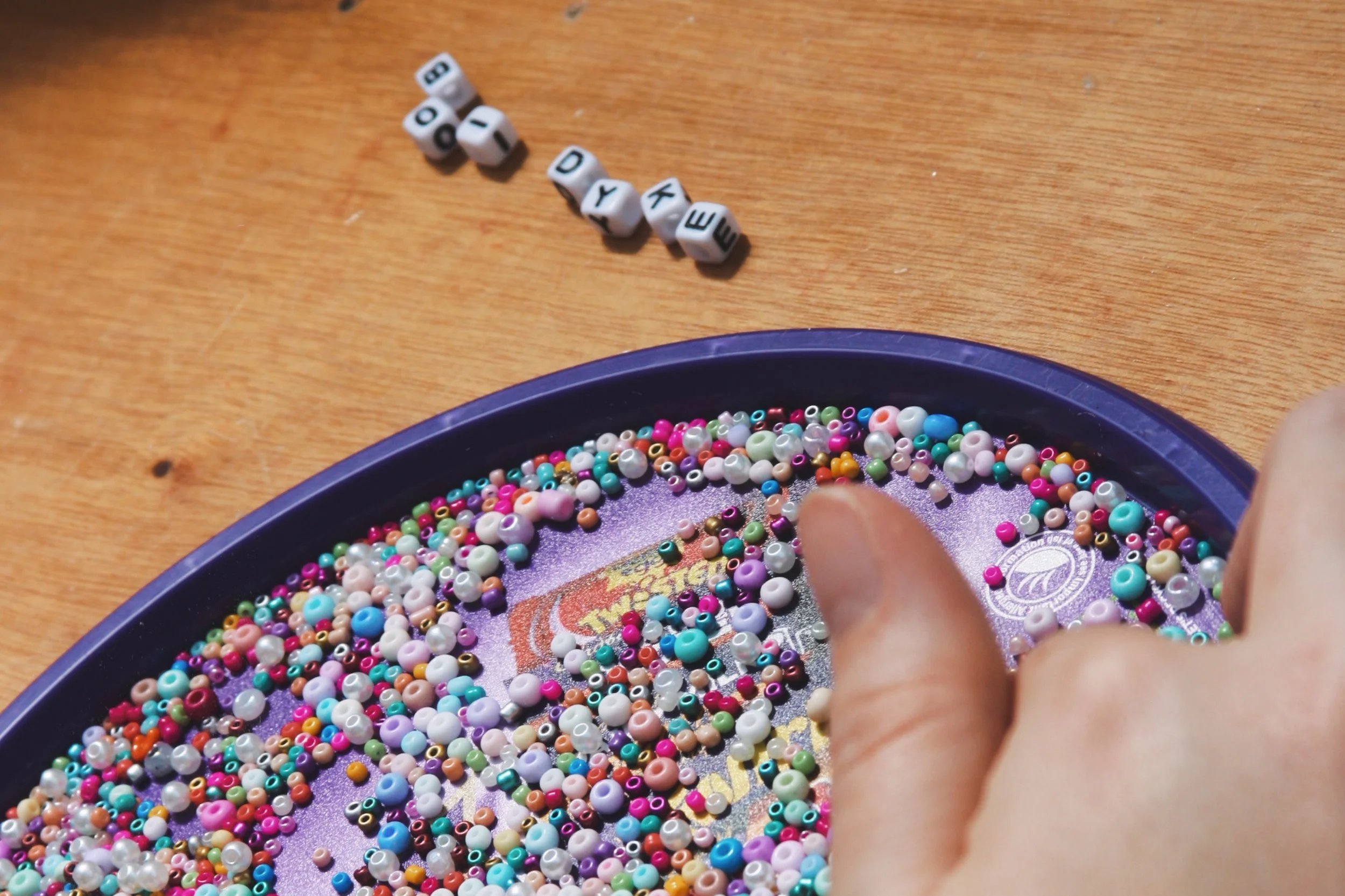
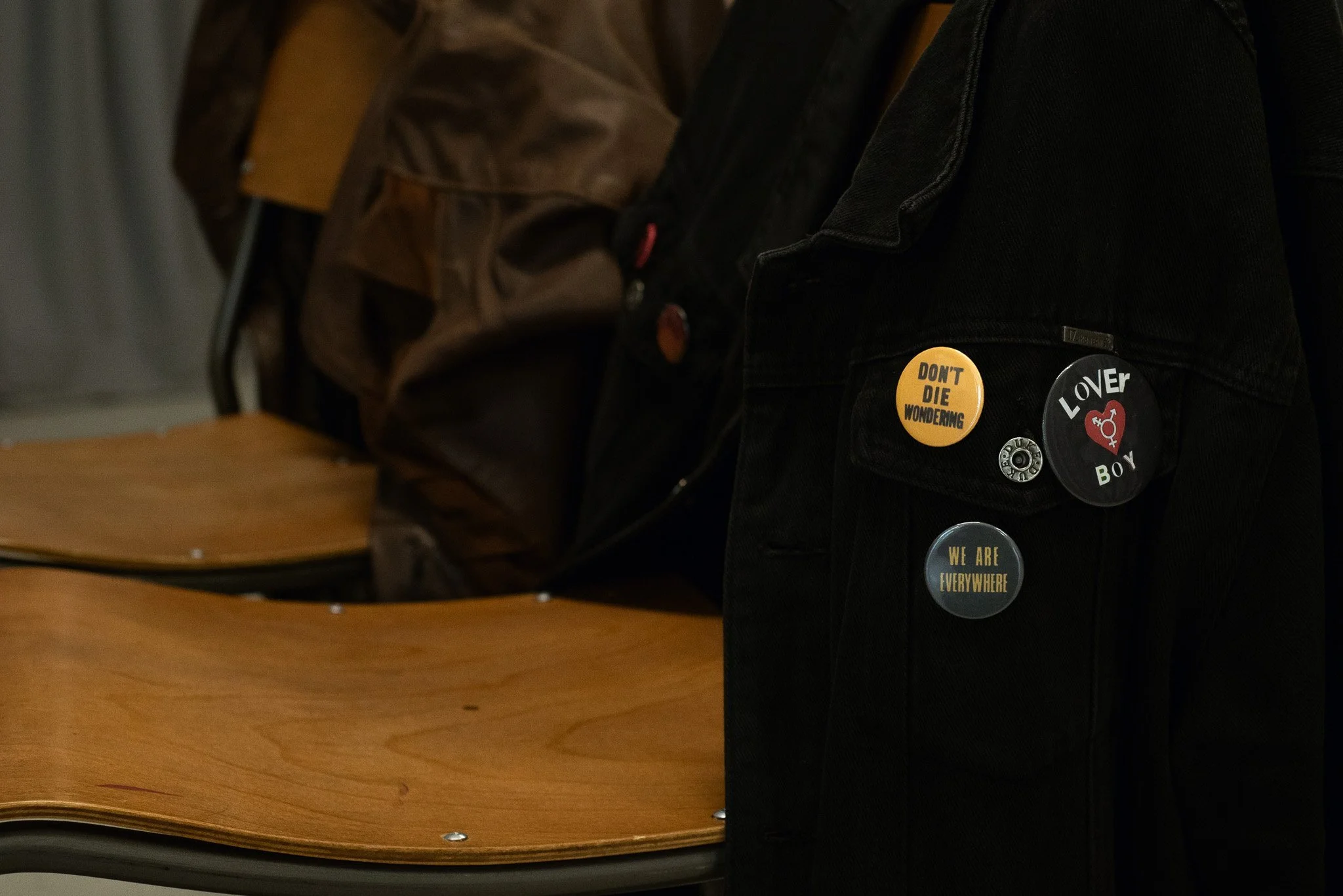
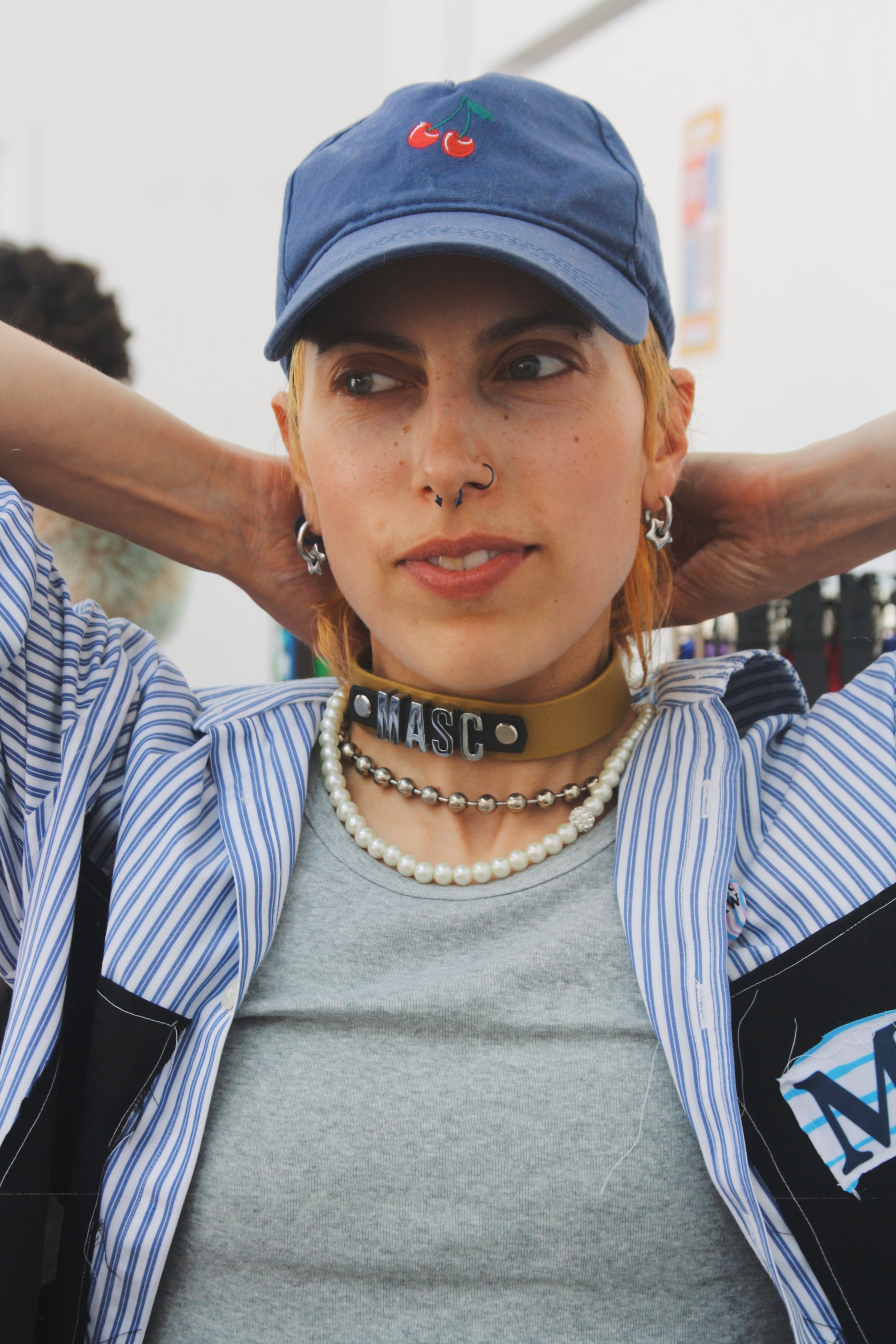
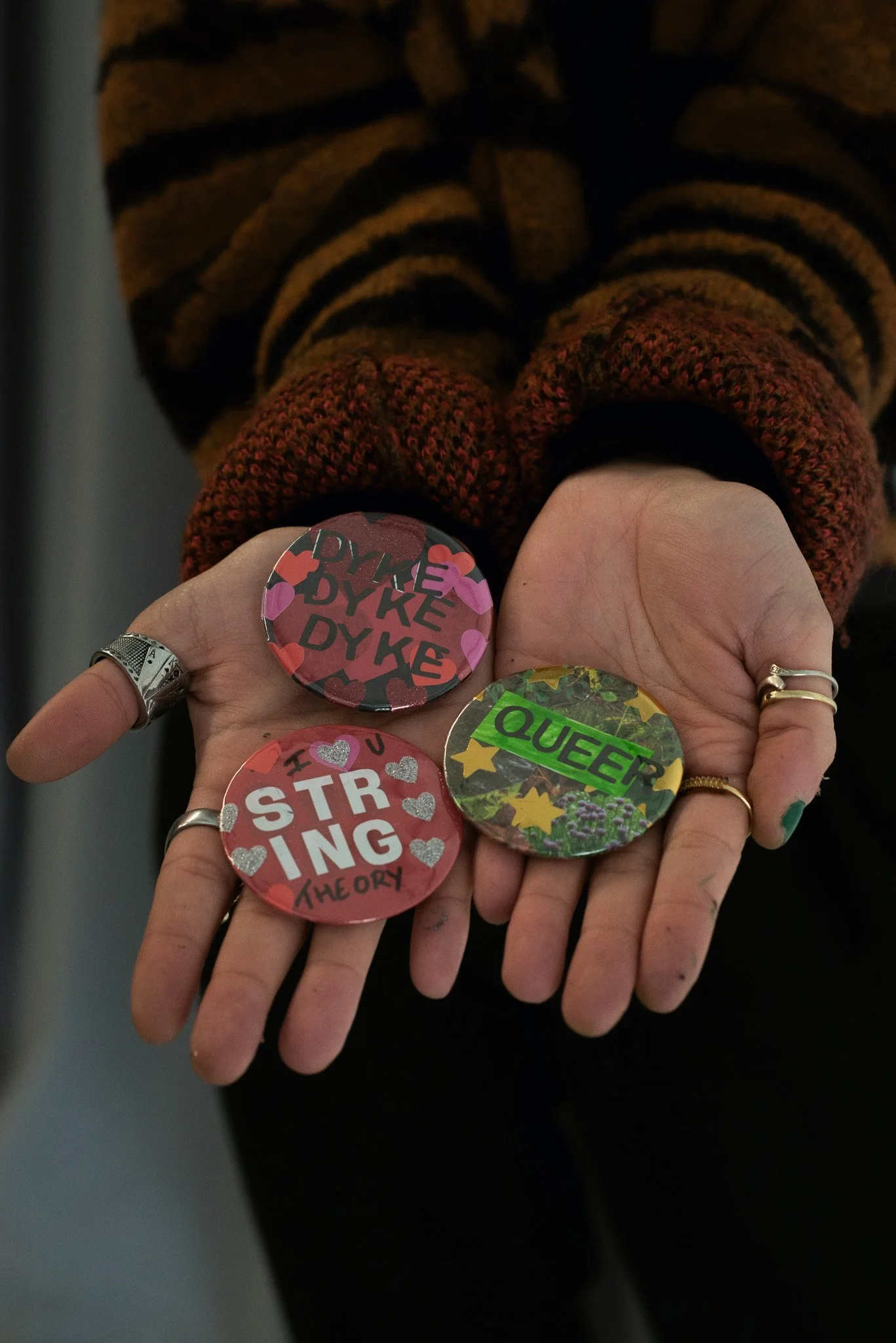
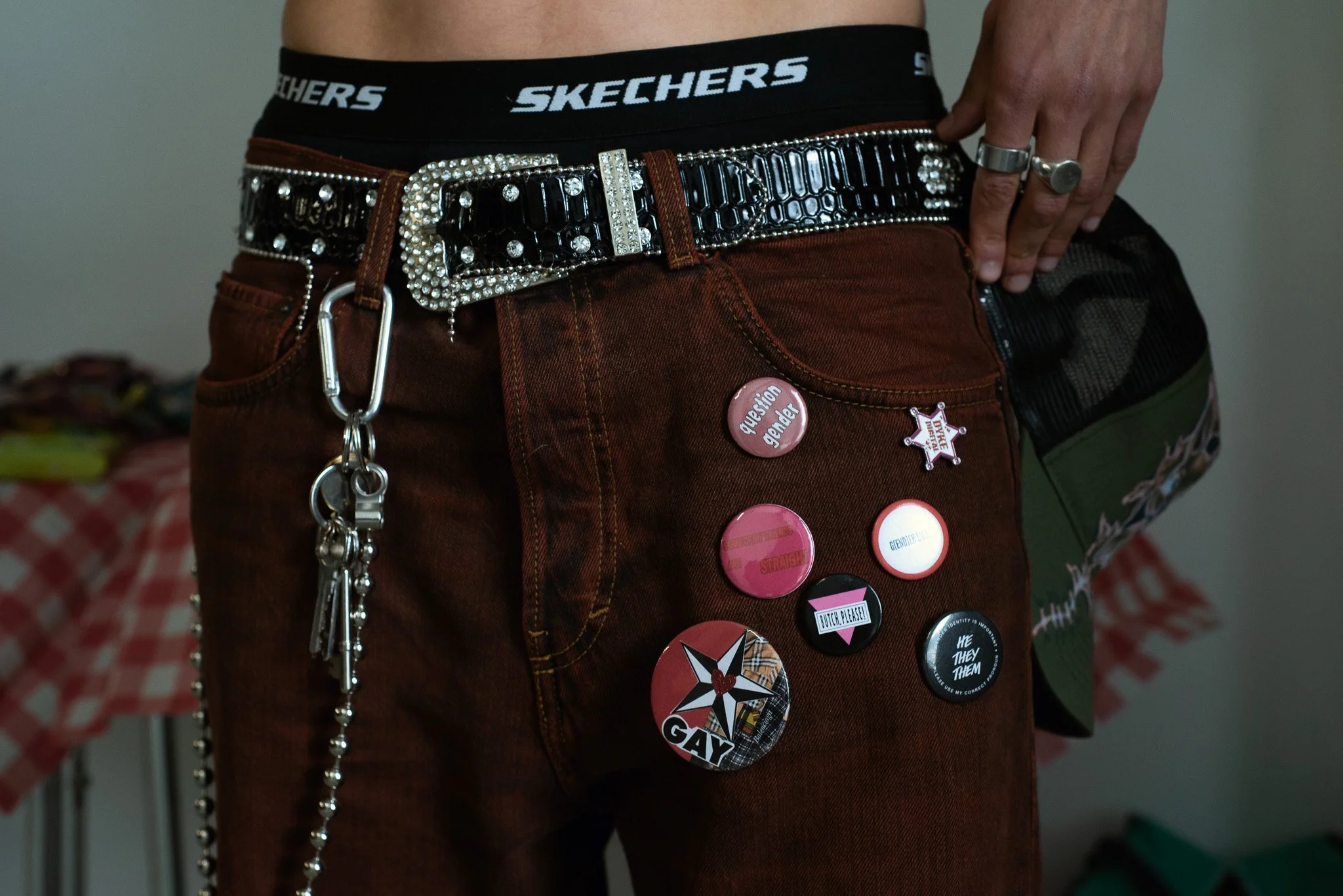
Lastly, kids toys as jean/belt loop/bag accessories are an immediate go-to for me. My expression is heavily inspired by childhood nostalgia – and I love fucking with perceptions of gender by using random toys as embellishments that obscure gender coding. I have a girly haircut, a girl’s T-shirt with a badge on my hat that says “dyke” but with a ‘Bop it’ dangling from my boyish baggy silver denim jeans.
Gender confusion to perfection, no?
Total perfection. Aside from being a queer space and a fashion space – you have also created a genuinely safe, welcoming community space, have you found that the people who come to you have been struggling to find community elsewhere? And what do you think could be done about that if so?
Yes, very much so. People yearn for a space to just hang out and talk, and to be able to just exist as themselves. Lots of people admit that they find it difficult to find community – that a lot of spaces rely on clubbing or feel very ‘clique-y’. G(end)er Swap events provide a space where you can be yourself without having to perform or prove yourself. A lot of people find new friendships at my events which make me feel so warm and fuzzy. I have also built community and have made enduring friendships through my community work, which I am also so grateful for since I didn’t know a lot of people when I first go to London.
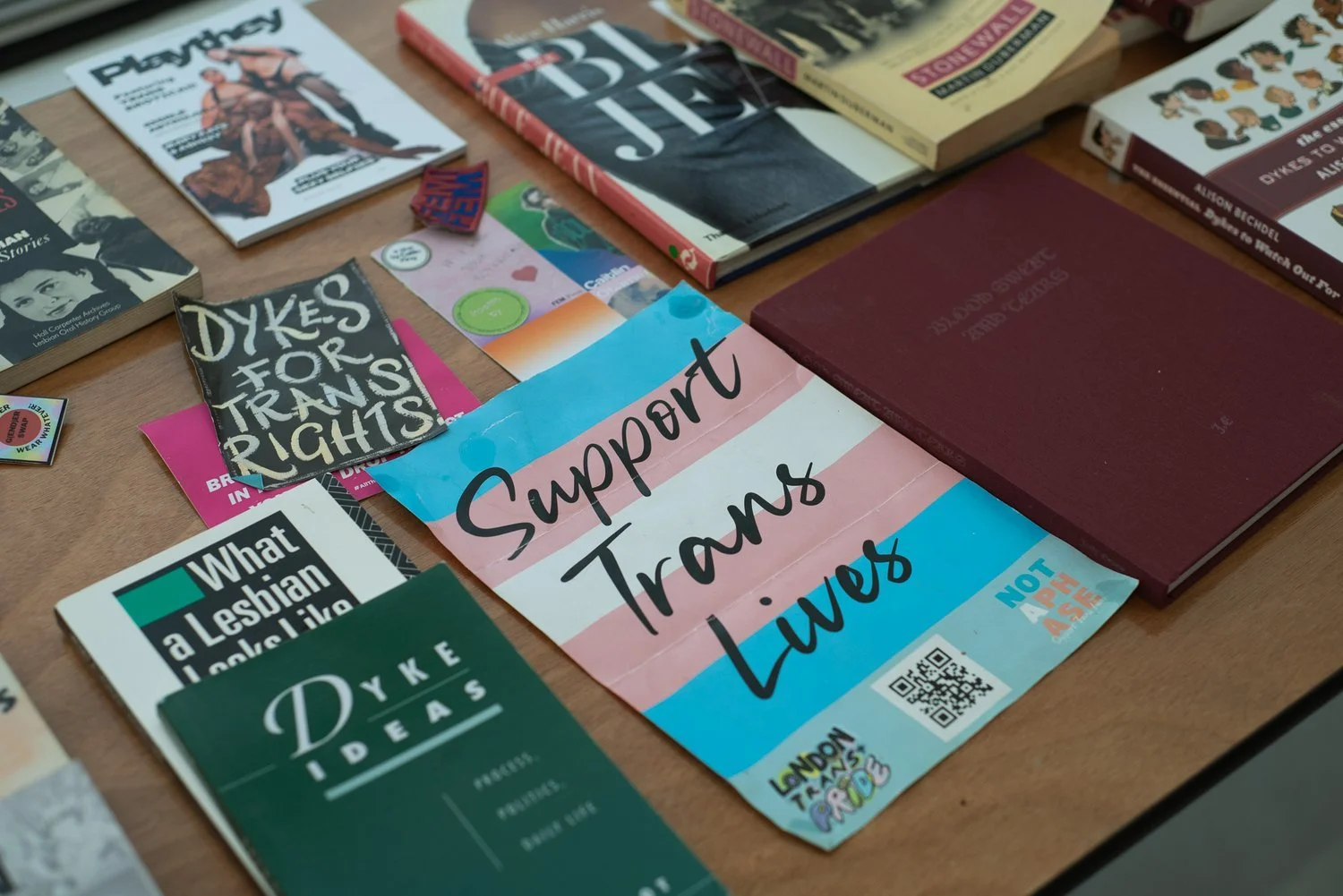
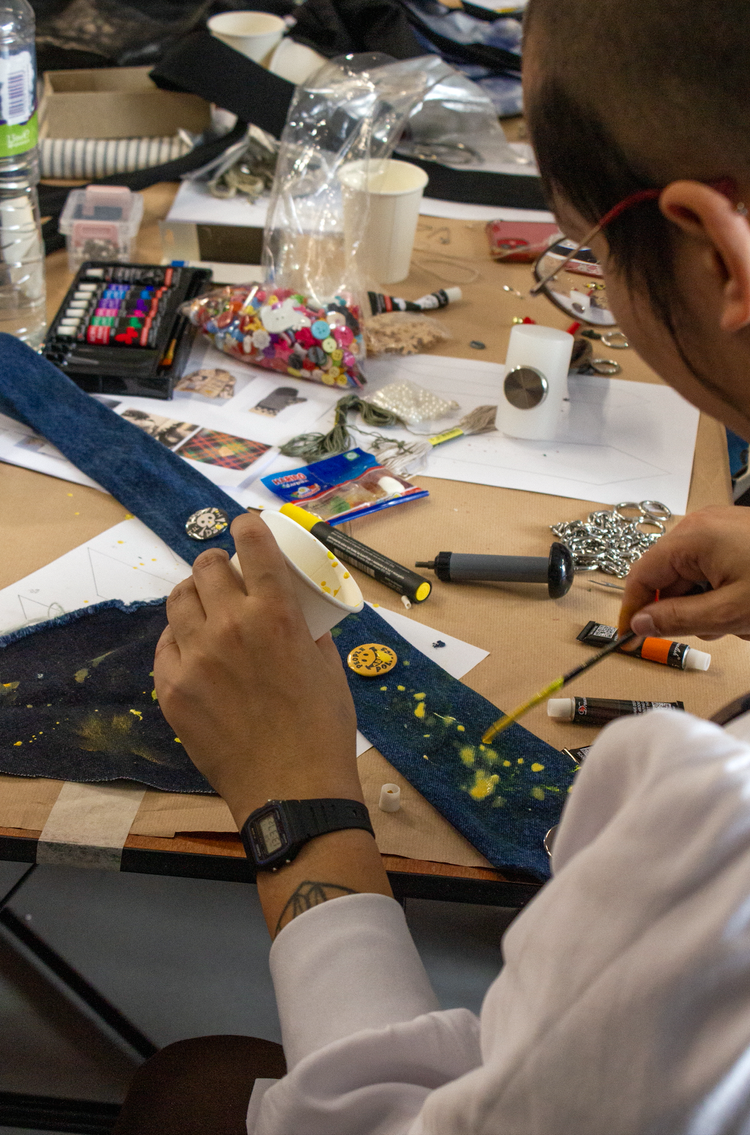
I think generally we need more connective community events that don’t rely on partying, dating or inaccessible influencer events (which there seem to be too many of in my opinion). Making/crafting/skill sharing is also a great way to learn from each other and to build a supportive network amid this capitalist hellscape we are currently living in.
Ah yes, the hellscape. It’s truly a hellish time every event and space seems to be led by a brand or influencer and the word community is bouncing around in such a hollow way, I love seeing this return to community led spaces and crafting/skill sharing to combat that. Now, potentially a controversial question – we hear so much feedback from Transmasc people within our community that there seems to be gap in the support and protection of Trans+ people who look more masculine. Maybe that’s worded wrong - a lack of visibility and activism around transmasc people perhaps. From your work (and much more knowledge on the subject than me) have you found that to be a particular gap?
Well, this might be a controversial answer to your question, but I immensely struggle with the identarian aspect that arises in community organising discourse that leads to a lot of unhelpful finger-pointing. In my opinion, there is a gap for support and protection of all Trans+ people of all gender experiences. We need to do more work to create spaces where everyone’s diverse gender experiences and expressions are seen and heard and validated across the board. There may be a lack of support for transmasc people who look more masculine, but there is also a lack of support for butch trans women too. So, I struggle with this honing in on one experience- it causes a lot of inner community tension and fragmentation.
There is a lack of knowledge, or understanding of transmasculine experiences more widely because they aren’t platformed as often in mainstream media – and therefore people are generally out of the know in terms of what resources/support to offer and what those support systems would look like. Part of my work is to illuminate these experiences for G(end)er Swap event attendees, followers, and (die hard) allies, and to alert people to these support networks and resources, so that wider awareness of different trans experiences, and a variety of support services for these experiences, can proliferate.
I really love that answer, thank you, I definitely see the problems that come with categorising, sub-categorising, and then finger pointing instead of making space for everyone. You do a LOT of things outside of G(end)er Swap, so next question – why are queer people so talented? That’s kind of a joke, but to pull on the serious thread in it – could you speak on the ingenuity, and trend setting, and unending creativity that pours out of the LGBTQIA+ community even under extremely difficult political climates?
Haha love this question!
I am obsessed with talking about the RESOURCE-FULLNESS that queer folk hold as a powerful tool that not many people have. This resourcefulness is shaped by the years of being excluded from access to things so we have had to pave our own way, create our own realities, find new creative and imaginative ways to utilise resources for our own well-being, self-expression and to connect with people via new means of communicating and by inventing our own social codes.
We ooze uninhibited creativity and have a natural inclination to knowing how to work with what we’ve got. The stress of difficult political climates pushes us to imagine new queer worlds and futures and to take initiative to create them for ourselves -because no one else will! Mainstream society doesn’t understand the untapped talent that exists in queer communities – but I guess that just means that there’s just more for us to revel in and experience.
How have you found your voice in your own creativity?
To be honest I have found my own voice in my own creativity by pushing past self-cringe – which I think is something that can hold a lot of people back. For example, I am a huge lover of Tumblr genders and gender experiences that even transcend human (and by some segments of the trans community seen as mega cringe) – I find a lot of creative inspiration from learning about these worlds.
As I mentioned before, I love the aesthetics of child hood nostalgia (late 90s/early 2000s) and I just fully embrace these which also feeds into my love for furry culture (this involves a whole new subset of interview questions I know). I am constantly pulling from my archive of things that excite me and always SO ready to nerd out to create new pieces of work without worrying about what other people think about it. It took years of practice for me to get to this point. But I also recognise this as my unique selling point- and I encourage your readers to really lean in to what makes them who they are too. Forget what is trendy- just remember who you are instead!
Some projects that I am really proud of: my recent e-publication that I created with support of the Develop Your Creative Practice grant by the Arts Council earlier this year entitled A DIY GUIDE TO GENDER HACKING. It’s a digital zine that inspires gender exploration from the margins (embracing cringe content, reclaiming slurs thrown at us from right wing media, re-imagining what fashion could look like). It’s my first writing project that amalgamates all of my interests and things that I stand for in one place.
The other work I am really proud of is the outfit I created for the Trans Daddy performance in June 2024. I was one of around 30 trans performers invited by Duckie to re-imagine a trans daddy archetype for a massive trans spectacle open to the public. I opted for reclaiming myself as Hack Daddy, creating a DIY two piece adaptable bleach denim fit covered in carabiners and replaceable Velcro patches. Attendees could pull words, keychains, toys, images and new fashion items from a box and dress me as they wished as a way for them to ‘make up’ their own gender and to re-imagine gender potentialities via dress.
You can check out more on my website: www.santisorrenti.com
Yesss so many things, we love a multi-faceted creative (Make sure you check out that website readers.) Are there any queer fashion icons or creatives that you would recommend our readers get on their radar?
I am super inspired by Mars Wright – a trans activist in the states who designs his own clothes with gender affirming slogans and imagery and focuses on positive representations of masculinity.
I love Casil McArthur who is a model representing femme trans masc expression.
Honestly not necessarily overtly queer, but I am obsessed with the Y2K Jaded London model campaigns and aesthetics.
Mostly I am inspired by people in my own community in London : the streetwear collective of designers that make up Fantastic Toiles, I love the work of Wenpius, Art the Catboy on Tik Tok who creates the most amazing gender chaotic creations, I love Wet Mess’s performance work and personal style that I view as very post gender, and Mr. Lez Bag and GATTO– I could keep going there are too many!
There are too many, agreed that was probably the hardest question on my list. So to wrap it up, what’s coming next for you?
I do have a new big project I want to launch in 2026 – but I can’t say much about it yet (sorry!).
But other things that are coming next: MORE writing and publishing on the topics of queer fashion and alt gender exploration/experimentation. I am planning to develop more clothing art to exhibit and performance art that focuses on fashion discourse. I am really working on trying to land a PhD with research focusing on fashion/trans identity experimentation/activism so I can use my experiences to share my knowledge/teach in the field.
For G(end)er Swap I am planning bigger and better style and makeup support programmes -and more printed zines which seems like it’s what the people want these days.
I also focus on prison support programmes with G(end)er Swap and am hoping to get more regular style support in for trans people in prison across the UK too.
Big things still coming so keep up to date on socials and the G(end)er Swap website!
Socials: @genderswap and @santibabi for my own personal work